Pantry Moth Traps VIRTUVEI
For monitoring pantry moths in kitchens, pantries and cupboards containing dry food.
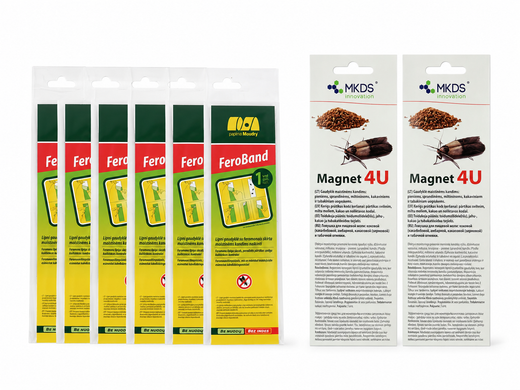
- ✓1 × FEROBAND, 5 pcs.
- ✓2 × Magnet 4U
- ✓Insecticide-free monitoring
- ✓Kitchens and pantries
Start by identifying whether moths are coming from stored food or from wardrobes and textiles. The prepared kits support monitoring, source removal and control in the kitchen, wardrobe or throughout the home.
Traps help monitor adult moths, but the source of the infestation must also be found and removed.
For the kitchen, wardrobe or whole home. Each kit combines products selected for a specific moth type and location.
For monitoring pantry moths in kitchens, pantries and cupboards containing dry food.
When the moth type is uncertain or activity is found around both food and textiles.
For wardrobes, dressing rooms, carpets and other textile storage areas.
Pheromone traps help detect and reduce adult moth activity, but they do not remove eggs or larvae already present in food or textiles.
Compare the location, contents and primary purpose of each kit.
| Comparison | KITCHEN | WHOLE HOME | WARDROBE |
|---|---|---|---|
| Problem type | Pantry moths | Both moth types | Clothes moths |
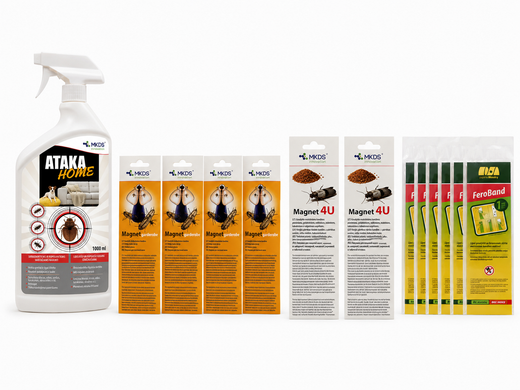
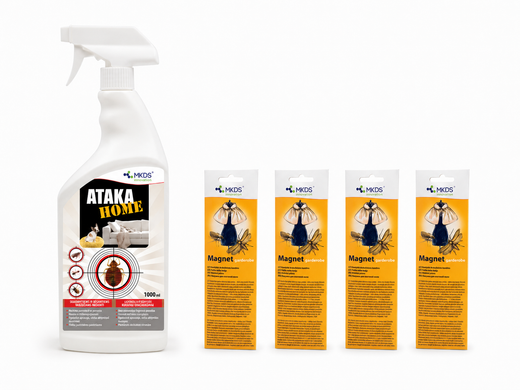
| Main products | FEROBAND + Magnet 4U | FEROBAND + Magnet 4U + Magnet GARDEROBE + ATAKA HOME | Magnet GARDEROBE + ATAKA HOME |
| Insecticide included | No | Yes - ATAKA HOME | Yes - ATAKA HOME |
| Main purpose | Adult moth monitoring | Monitoring and control across several areas | Monitoring and targeted surface treatment |
| Best suited for | Kitchen, pantry and dry food | When the moth type is uncertain | Wardrobes, dressing rooms and textiles |
Correctly identifying the source is essential. Moths seen in the kitchen usually require inspection of dry food, while damage to wool or textiles points towards clothes moths.
Pantry moths and clothes moths require different control methods. Adult moths reveal that a problem exists, but the larvae developing in food or animal-based fibres cause most of the damage.
Pheromone traps attract adult males and help measure activity. They do not mean that eggs and larvae within the infestation source have been removed.
Look for larvae, webbing, clumped grains or damaged packaging in flour, cereals, nuts, seeds, dried fruit and pet food.
They most often damage wool, fur, feathers, carpets and rarely disturbed textiles. Infestations develop in dark, quiet areas such as wardrobes and storage spaces.
Infested food should be discarded, while textiles need to be inspected and appropriately washed, frozen or professionally cleaned according to their care instructions.
Important: use ATAKA HOME only on surfaces permitted by its label. Do not spray it on food, utensils or clothing.
Check the kitchen and dry food first, then wardrobes and textiles. The location of activity usually points towards the correct kit.
When the source cannot be identified, inspect both areas. The place where an adult moth is seen flying is not always where its larvae are developing.
The steps below help organise the process. Always use each product according to its label and instructions.
Check whether activity is linked to dry food or to clothing and textiles. Look for larvae, webbing, damage and the location where adult moths appear.
Discard infested food. Inspect textiles and wash, freeze or professionally clean them as appropriate for their care requirements.
Vacuum and clean cupboards, shelves, corners and cracks. In wardrobes, vacuum the interior, skirting boards, carpets and areas beneath furniture.
Position pantry moth traps near food storage areas and clothes moth traps in wardrobes or dressing rooms, following the instructions for each product.
When the kit contains ATAKA HOME, remove food, utensils, people and animals. Apply only to label-approved surfaces, never directly to clothing or food.
Check traps regularly and replace them as instructed. If activity continues, search again for a hidden infestation source.
Pantry and clothes moths respond to different pheromones and occur in different places. The correct trap must therefore be selected for the specific problem.
FEROBAND and Magnet 4U are intended for monitoring pantry moths near cupboards, pantries and areas where dry food is stored.
Pantry moth monitoringMagnet GARDEROBE helps monitor clothes moths, while ATAKA HOME is used on label-approved surfaces around wardrobes, skirting boards, carpets and other textile areas.
Clothes moth controlThe WHOLE HOME kit combines both trap types with ATAKA HOME, making it the broadest choice when the moth type is uncertain or several areas are affected.
Look at the location and type of damage. Larvae and webbing in dry food indicate pantry moths, while damage to wool, fur, carpets or rarely disturbed textiles points towards clothes moths.
Not always. Traps help monitor and catch adult males, but they do not remove eggs or larvae hidden in food or textiles. The infestation source must be found and removed.
Near cupboards, pantries and dry food storage areas, following the instructions for the specific product. Do not place traps directly inside food.
Replace them according to the instructions for each product. Effective life varies, so record the opening date and inspect the adhesive surface regularly.
Do not apply it directly to clothing unless the product label explicitly allows this use. Empty the wardrobe and treat only surfaces approved by the label.
Remove or protect food, utensils and food-contact surfaces. Apply the product only according to its label and never directly onto food.
Choose the WHOLE HOME kit. It contains traps for pantry and clothes moths plus ATAKA HOME for label-approved surfaces in textile areas.
When activity continues after the source has been removed, several rooms are affected, the infestation is heavy, or the problem occurs in a commercial or storage facility.
Choose KITCHEN for stored food, WARDROBE for textiles and WHOLE HOME when the moth type is uncertain or several areas are affected.

Kitchen and pantry

Most popular · both moth types

Wardrobes and textiles
Use biocidal products safely. Always read the product label, instructions for use and product information before use.